
Conserving the Columbia Valley
THE WE-CAN IMPACT STORIES-14: Wildsight Golden
By Tara Joan Nyhan, WE-CAN Volunteer
How can we conserve nature around us while educating our communities on it in the midst of the Climate Crisis? Let’s start with learning from each other. Wildsight Golden is a conservation organization based in the Columbia Valley. By informing the public on how to take care of their air, getting kids engaged with nature, and turning volunteers into citizen scientists, they help create an educated population that cares for the ecologically rich forests and habitat of the Golden area.
This week’s story comes from the Columbia Valley, also known as the line that cuts the Rockies in half on a map. Along this line lie several British Columbian towns, resorts, and idyllic lakes and rivers, all surrounded by picturesque mountains and wildlife. One of the most notable of these settlements, and our location for today, is the town of Golden.
With a population of over 8000, Golden is one of the largest settlements built around the Kicking Horse River, on the unceded territory of the Ktunaxa and Secwepemc peoples, and home to the Metis Nation Columbia River Society. It’s also one of the homes of Wildsight, a conservation organization many of you may know of, that stretches up and down the Columbia Valley.
Wildsight’s Golden mission is to maintain the ecological value of the Columbia headwaters area, a region brimming with biodiversity. They do this by taking an approach that centers on community collaboration and education. As their website states, “We participate effectively in government and community processes to promote the protection of clean air, forests, water, and overall biodiversity.”
An all-encompassing approach like this includes education for active members of the community at all ages. Wildsight Golden has education programs both to get youth interested in the environment around them and to get adults interested in reducing their impact on it.
Cleaning the Air
For the latter, by informing the public about proper wood stove use and the effects of backyard burning, Wildsight Golden’s Air Quality Committee works to solve a significant air quality issue. They give out moisture meters and help provide rebates with the BC Lung Foundation to make installing cleaner heating options more accessible. Their efforts encourage residents to help reduce Golden’s air quality issues, which are made worse by its topography. The V shape of the valley traps pollutants in a small area, creating a dense cloud of particulate matter that worsens under cold temperatures. As Taylor puts it, “It’s a pretty big problem in Golden here, especially in the winter, with these temperature inversions, and it’s when everyone uses their wood stoves.”

Wildsight Golden also seeks to bring awareness to the prevalence of invasive plants in the area. From educating homeowners about what’s growing in their backyards to organizing community weed pulls, Wildsight Golden assists its residents in keeping their neighbourhood ecosystems intact.
Inspiring Young People
As for their youth, Wildsight Golden has programs for every part of the year. When school is active, they bring environmental education into classrooms by holding birding breakfasts, facilitating Earth Day cleanups, hosting field trips, and collaborating with the community. In the summer, they run the Get Wild! Summer Day Camp, where kids take part in a multitude of outdoor activities. One of their oldest programs, Get Wild! has been active for over a decade. Kids enrolled spend their summer learning about the environment, getting wild, and exploring the natural wonders that the Columbia Valley has to offer.

Conserving the Wetlands
And there is no lack of nature for these kids to explore – there’s over 110,000 hectares of rich habitat in the surrounding Columbia Valley to keep them occupied. That’s a lot of valley. And it’s packed with wildlife. The valley cradles 180 km of the last untouched portion of the Columbia River, the largest habitat of its kind in the Pacific Northwest. The Columbia Wetlands have long been recognized for their ecological significance on a national scale. In 2004, Wildsight helped get a portion of it designated as an official Ramsar area. Ramsar areas were established as part of the Ramsar conventions, which identify and safeguard Wetlands that are vital on a global scale.
With an incredible variety of biomes and elevations, the Wetlands serve as an essential habitat to over 216 species of birds and mammals. The Columbia Valley as a whole is commonly referred to as “The Pacific Flyway,” as it serves as a massive migration route for so many BC birds, many of which are at risk.
Protecting the Swallows
We’re going to pay close attention to one of these birds, who may at first seem pretty common: the Swallow. They are delightful, agile songbirds with a sizable portfolio of cultural significance across the globe. They even have their own proverb, thanks to Aristotle (“For as one Swallow or one day does not make a spring, so one day or a short time does not make a fortunate or happy man.”) Aside from being a mythological symbol of everything from safe passage to the coming of spring, Swallows are a top predator of BC mosquitoes and similar bugs. A single Barn swallow is estimated to consume 850 bugs a day. This makes them incredibly vital when it comes to mosquito control and BC’s ecosystems at large, and makes their recent steep decline even more concerning.

Over the past four decades, the population of Barn Swallows in Canada has declined by 76%, while the population of Bank Swallows has declined by nearly 98%. The Columbia Valley is a major habitat for both, with its naturally occurring slopes and nooks and older buildings with welcoming rafters.
Noted biologist Rachel Darvill spearheads Wildsight Golden’s conservation efforts. In addition to their Columbia Wetlands Waterbird Survey, Wildsight Golden facilitated the Upper Columbia Swallow project, which used citizen volunteers to collect breeding and location data, monitoring 135 swallow colony sites to aid and inform future management. In addition to training volunteers as citizen scientists, CVSP has informed and educated the public on swallow conservation and the duties outlined in the Migratory Birds Convention Act. Since then, Wildsight has continued it’s conservation efforts through the Swallow Habitat Enhancement Project. They have installed half a dozen artificial Barn Swallow habitats and 102 nesting cups, as well as multi-species structures for both swallows and bats. In 2024, they restored Bank Swallow habitat in Windermere Lake, preserving the home of around 200 active breeding pairs, and installed an artificial Bank Swallow habitat near Donald.
We must safeguard the future of these birds. Mass decline in birds can be attributed to all forms of human interference. Wildsight Golden marks the intolerance and illegal disposal of swallow nests on private properties as one of the contributing factors to their decline, alongside the destruction of decommissioned buildings that house birds and bats, and the greater impacts of climate change on BC’s Interior.

The Rainforest in the East
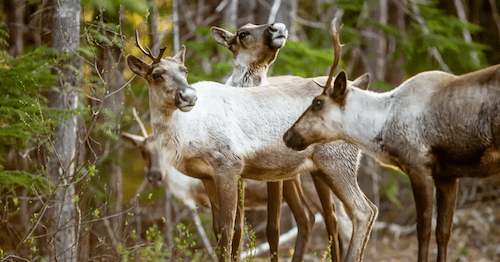
Wildsight Golden is an independent branch of Wildsight as a whole, whose scope extends from the inside of the Columbia Valley to the wider, temperate rainforest around it. Denizens of BC, particularly on the coast, often forget that we have rainforests on the east side as well as the west. As Taylor says, “A lot of people around here don’t realize that we have the interior temperate rainforest on our doorstep.” The interior temperate rainforest maintains its moisture from snowmelt from the Rockies, that is also at risk of becoming scarce. Between that and the unregulated logging efforts from several companies (Interfor, West Fraser, Stella Jones, and Pacific Woodtech …), and several recently discovered species of life-giving lichen and Southern Mountain Caribou, there is a lot to fight for. Wildsight has taken up a lot of the mantle, using public pressure and education as its main tools. If readers would like to aid them in that fight, here’s an immediate way to do so.
From engaging all residents in nature around them to preserving the vital habitat of the central Columbia Valley, Wildsight Golden has their work cut out for them. “I’m very proud of all the things (we’re) doing,” Taylor says.
Learning about biodiversity in the midst of the climate crisis can feel a little daunting, but if anything, it’s more important than ever to learn about your local wildlife. Go hiking, touch trees, and definitely look at the Swallows. You don’t know how long it’ll be before you see one again.
